Douglas Shire Sustainability Group (DSSG) believes the proposed Daintree Microgrid is “green wash” and that it may even lead to an increase in fossil fuel use, rather than a decrease.
DSSG president, Didge McDonald said that upgrading standalone solar systems in the Daintree is a far more environmentally and cost-effective solution, and would have huge community support. This would virtually eliminate their need to use diesel-powered back-up generators.
The proposed micro-grid scheme would supply 240-volt power grid to established properties between Cow Bay and Cape Tribulation at a total cost of development estimated at $80 million.
It would be powered by solar panels on cleared land in the Cow Bay area with lithium battery storage, a system to store hydrogen, a fuel cell generator to generate electricity from the stored hydrogen and an LNG generator backup. The distribution network would consist of 69 kms of 22,000 volt underground cable with 27 transformer kiosks and junction boxes/switchgear to be installed. Distribution will extend to all 32 road reserves between and including Cow Bay to Cape Tribulation.
DSSG and others have lodged formal objections to a recent Development Application lodged by Volt Advisory with Douglas Shire Council.
Mr McDonald said the alternative of upgrade of existing standalone (mainly solar) systems has been well researched and documented (KPMG 2019 Qld State Government Report) and could be completed for a fraction of the cost of the proposed micro-grid. It would not require kilometres of cabling through World Heritage Areas and could be implemented immediately.
“Not only is the micro-grid a greenwash but grid power will drive development causing an increase in use of fossil fuels. This is contrary to the local, regional and state planning guidelines, all of which prioritize conservation over development.”
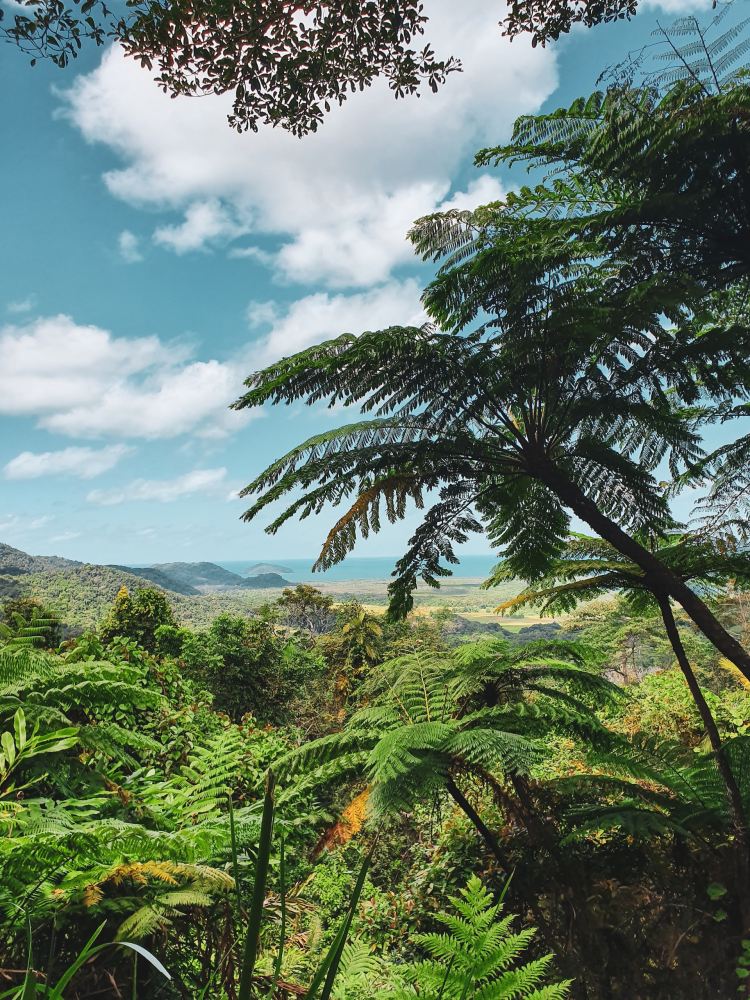
The Daintree Rainforest is one of the world’s rarest and most irreplaceable ecosystems, often described as ‘the jewel in the crown’ of the Wet Tropics World Heritage Area of Far North Queensland. All development which occurs within this area has the potential to degrade and threaten these ecological values.
Along with the Great Barrier Reef, the Daintree Rainforest is a foundation of the Shire’s tourism industry. It is in the economic interests of the Douglas Shire to make all possible efforts to conserve the Daintree Coast – this is clearly what visitors want!
This project thus far has been funded by the previous Morrison Government, driven by local member Warren Entsch and supported by Angus Taylor, allegedly in return for Entsch agreeing to recontest the seat of Leichhardt in 2022. (see The Australian 22 June 2023)
Despite two allocations amounting to over $20m, both awarded without tender or competitive bids, there has been no published report, environmental impact assessment, business plan, cost benefit analysis or survey of community demand.
Most residences and some businesses in the area have existing stand-alone systems, some quite advanced, other less so. There has been no community survey of demand and many people having invested in stand-alone systems have no desire to connect to a grid, losing their independence.
For example, Matt Wilson, business operator with two Airbnb’s, said he has not resorted to using his generator back-up for three years at one and six years at the other property. “My systems are not particularly big, about 5 kw solar cells per property”, Mr Wilson said.
Three Freedom of Information (FOI) applications to the relevant Australian Government departments have been refused in full or in part meaning there is no public visibility of how taxpayer funds are being spent on this controversial infrastructure program.
It is understood the project requires at least an additional $45 million and is already overdue its projected start date of November 2023.