
Mike Berwick AM
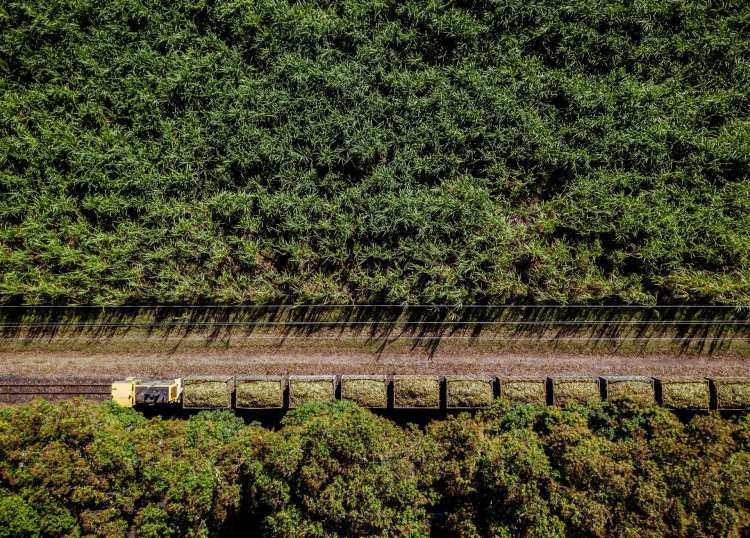
Cane growing, the industry that built the shire as we know it is about to disappear altogether. Becoming a one industry town should set off the alarm bells for all of us with the exception of those eying off agricultural land for subdivision, housing and hobby farms for short term profit.
The end of cane growing in Douglas has been obvious to most but denial by the industry has been a tragedy. Any suggestion of an alternative agricultural future for the shire has been taken as a threat by the cane industry which, understandably, needs every bit of supply it can get to keep the mill viable. Only the current high price of sugar has kept it going this long.
The sad thing is that if planning for the inevitable had begun earlier this could have been turned from catastrophe to opportunity.
Lets hope some serious planning begins now and while that is underway agricultural land is kept for primary production. This shire needs an agricultural sector for a secure and resilient economy but also to protect our biggest industry, tourism – the tight urban footprints and stunning rural landscape made so by neat cane paddocks with a background of forested hillslopes and mountains is a fundamental component of a successful tourism industry that is built on our two world heritage assets – the Reef and the Daintree Rainforests.
The reef is in serious trouble from global warming and the current local, state and Australian governments are intent on developing the Daintree Coast, shifting investment from conservation to infrastructure supply like grid electricity, a bridge over the Daintree and upgrade of the coast road to Cooktown. These are serious threats to tourism, not mention the environment but the subdivision of rural lands would be just as bad. The scenic beauty of this shire may not be a conservation priority like the Reef and Daintree Coast but for the visitor it is of equivalent value.
The Mill has had some great ideas – co-generation using the waste fibre, traditionally burned to get rid of it, to generate renewable energy; low GI sugar; the value adding of the molasses as stock feed supplement; enhancing mill mud as a synthetic nutrient replacement; Ketchup Manis; the use of by-products for renewable energy like ethanol and avgas and more advanced methods to extract the full energy potential of these products such as controlled biological digestion to capture the carbon chain molecules for energy and residues for nutrient supplements
The Mill, in it’s heyday, was a leader in new technology; the firs, I understand, to computerise its operations and transport systems. There has never been a shortage of innovative ideas.
But dwindling supply led by converting cane farms to hobby farms and the switch of some large swathes of land from cane to cattle has undermined supply. In my time as Mayor, Mill Board Chair, Don Watson, used to say the Mill needed a million tons/year to remain viable and its along time since that much has been grown locally. Supply has been propped up by cane from Julatten and Dimbulah but hauling cane by road over long distances has never been sustainable because farms distant from the Mill are subsidised by those close to it.
Evidence that uncertain long term supply would prevent any major investment in new technologies hit home hard in my time as Mayor when Stanwell Corporation pulled out of a major investment in co-generation. The investment in high efficiency furnaces, boilers and a generator (big enough to run the shire with renewable energy for much of the year as best as I recall) was cancelled at the last minute because the new Stanwell Board figured supply was not sufficiently reliable to justify such a long-term investment. At that time tenders had been called for the supply of equipment, a preferred one chosen and contracts drawn up….. it was ready to go. That would have likely kept the Mill viable and additional returns to growers paying for bagasse, as well as sugar content, might have kept farmers growing cane.
More recently innovative growers have been improving practices – minimal till, diverse species of fallow crops to put N into the soil and improve soil health, improving Nitrogen use efficiency, all adopted by progressive farmers, saving costs and reducing nutrient pollution to the Reef.
On the bright side there are plenty of opportunities including cattle, fruit trees, small crops, direct supply to tourism, and the emerging new commodity, ecosystem services such as carbon sequestration, water quality and the latest – biodiversity markets – still in its infancy but globally bullish and a fantastic opportunity in a globally biodiverse hotspot like Douglas.
My next opinion piece will explore these opportunities but first an example of the new market commodity – ecosystem services. In the course of my work I spent some time on a grazing property near Cobar in W NSW, a 30,000 ha place whose main income had been Dorper sheep (for meat) and harvesting wild goats, now a valuable form of red meat. I asked the owner to explain his income – “about $350,000/year from the Dorpers, $350,000 from harvesting wild goats and $400,000/years from carbon” is what he told me. At that time carbon was worth $10/tonne, now it’s $30 plus/tonne and will continue to rise as climate change policies bite. Carbon has saved the economy in this otherwise marginal grazing country and could be a vital component of a new reef and climate friendly agricultural economy here in Douglas and in itself, another tourism attraction.

Thanks for the article Mike. With the mill closing we need to turn to tourism/carbon/other agriculture. The speeding up of the establishment Mossman Botanic Garden would be great. It would be an employer of heaps of locals as well as training locals and non-locals in Botany/ag etc Apparently there is a link with TAFE already and a course being written.
Another Idea that needs quick action is the conversion of the railway between Port and Mossman into a cycle and walking track- whilst the right of way still exists. Can you imagine a Port to Mossman bike race or mini-marathon!!! Fantastic !
Got heaps of other ideas for this amazing but tiny and precious part of the world! Clare B